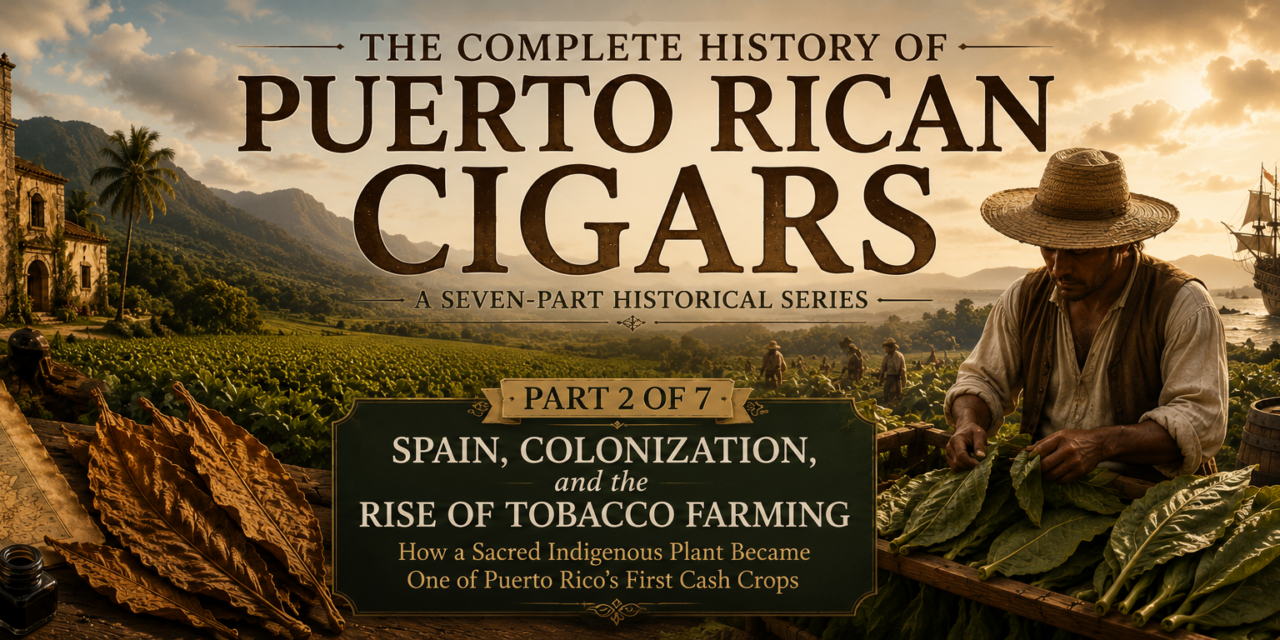
The Complete History of Puerto Rican Cigars
Part 2 of 7
Spain, Colonization, and the Rise of Tobacco Farming
How a Sacred Indigenous Plant Became One of Puerto Rico’s First Cash Crops
The arrival of Christopher Columbus in Puerto Rico in 1493 marked the beginning of a dramatic transformation for the island. The Taíno people had cultivated and revered tobacco for centuries, using it in religious ceremonies, medicinal treatments, and community gatherings. To them, tobacco was a sacred gift from nature.
The Spanish saw something different.
They recognized the plant’s commercial value.
As Spain expanded its empire throughout the Caribbean, tobacco evolved from an Indigenous tradition into one of Puerto Rico’s earliest agricultural industries. Over the next three centuries, tobacco farming spread across the island, laying the foundation for what would eventually become a thriving cigar industry.
The story of Puerto Rican cigars had truly begun.
From Sacred Plant to Valuable Commodity
Spanish explorers quickly noticed the widespread use of tobacco among the Taíno people.
At first, Europeans viewed the plant with curiosity.
Before long, they began transporting tobacco seeds and leaves back to Spain, where physicians, nobles, and merchants became fascinated by its perceived medicinal properties and recreational use.
Demand grew rapidly.
What had once been a regional crop cultivated by Indigenous communities soon became one of the most valuable agricultural products in the Spanish Empire.
Puerto Rico would play an important role in meeting that demand.
Puerto Rico’s Perfect Growing Conditions
Few places in the Caribbean offered better conditions for tobacco cultivation.
The island provided:
- Fertile volcanic soils
- Warm tropical temperatures
- Seasonal rainfall
- Mountain valleys with excellent drainage
- A long growing season
These natural advantages allowed tobacco plants to develop rich flavor, balanced aroma, and excellent burning qualities.
Spanish settlers quickly realized Puerto Rico could produce tobacco capable of competing with other Caribbean colonies.
The First Tobacco Farms
During the sixteenth and seventeenth centuries, small tobacco farms began appearing throughout Puerto Rico.
Unlike sugar plantations, tobacco farming often required less land and could be managed by individual families.
Generations of farmers learned how to:
- Select quality seed.
- Prepare fertile soil.
- Harvest leaves at the proper stage of maturity.
- Cure tobacco using carefully ventilated barns.
- Sort leaves according to texture, size, and color.
These techniques became family traditions passed from one generation to the next.
The Rise of Caguas
As tobacco production expanded, one municipality emerged as the center of the industry.
Caguas.
Located in Puerto Rico’s fertile central valley, Caguas possessed ideal conditions for tobacco cultivation.
Its fertile soils, dependable rainfall, and favorable climate helped produce high-quality tobacco that earned recognition throughout the Caribbean.
Over time, tobacco warehouses, merchants, and eventually cigar factories established themselves in the city.
Caguas would become synonymous with Puerto Rican tobacco for generations.
Tobacco Becomes Big Business
As demand continued growing throughout Europe and the Americas, Spain tightened control over tobacco production.
The Crown regulated cultivation, imposed taxes, and controlled exports through colonial trade policies.
Although these regulations often frustrated farmers, they also demonstrated tobacco’s growing importance to the Spanish economy.
Puerto Rican tobacco was no longer simply consumed locally.
It had become an international commodity.
Shipments moved throughout the Caribbean and eventually into European markets, helping establish Puerto Rico’s reputation as a producer of quality tobacco.
Preparing the Leaf
Growing tobacco represented only half the process.
After harvest, the leaves required careful curing before they could be used for cigars.
Farmers hung tobacco inside curing barns where airflow and humidity slowly transformed fresh green leaves into rich brown tobacco.
Once cured, the leaves were:
- Fermented
- Sorted
- Bundled
- Packed for transport
Only the finest leaves would eventually become cigar wrappers.
Every stage required patience and experience.
Mistakes could ruin an entire harvest.
A Culture Takes Root
By the eighteenth century, tobacco had become deeply woven into Puerto Rico’s agricultural identity.
Entire families participated in the harvest.
Communities relied upon tobacco income.
Merchants developed new trade routes.
Experienced growers built reputations based on the quality of their leaf.
The knowledge developed during these early centuries would eventually allow Puerto Rico to produce premium cigars recognized throughout the Caribbean.
The groundwork had been laid.
Looking Toward a New Century
As the nineteenth century approached, international demand for tobacco accelerated.
Puerto Rican farmers expanded production.
Entrepreneurs recognized the opportunity to manufacture finished cigars instead of exporting only raw tobacco.
New factories began appearing.
Master cigar rollers emerged.
The island was about to enter one of the most important chapters in its history.
Coming Next
Part 3 of 7 – Puerto Rico’s Tobacco Boom
Discover how the nineteenth century transformed Puerto Rico into one of the Caribbean’s leading tobacco producers as cigar factories expanded, skilled torcedores perfected their craft, and Puerto Rican cigars began reaching markets throughout the region and beyond.