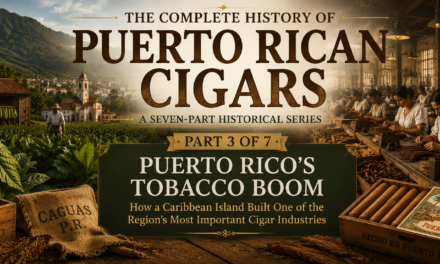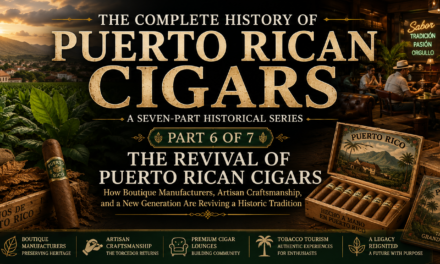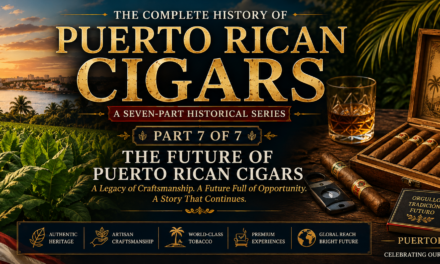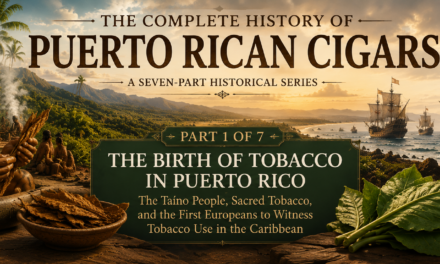
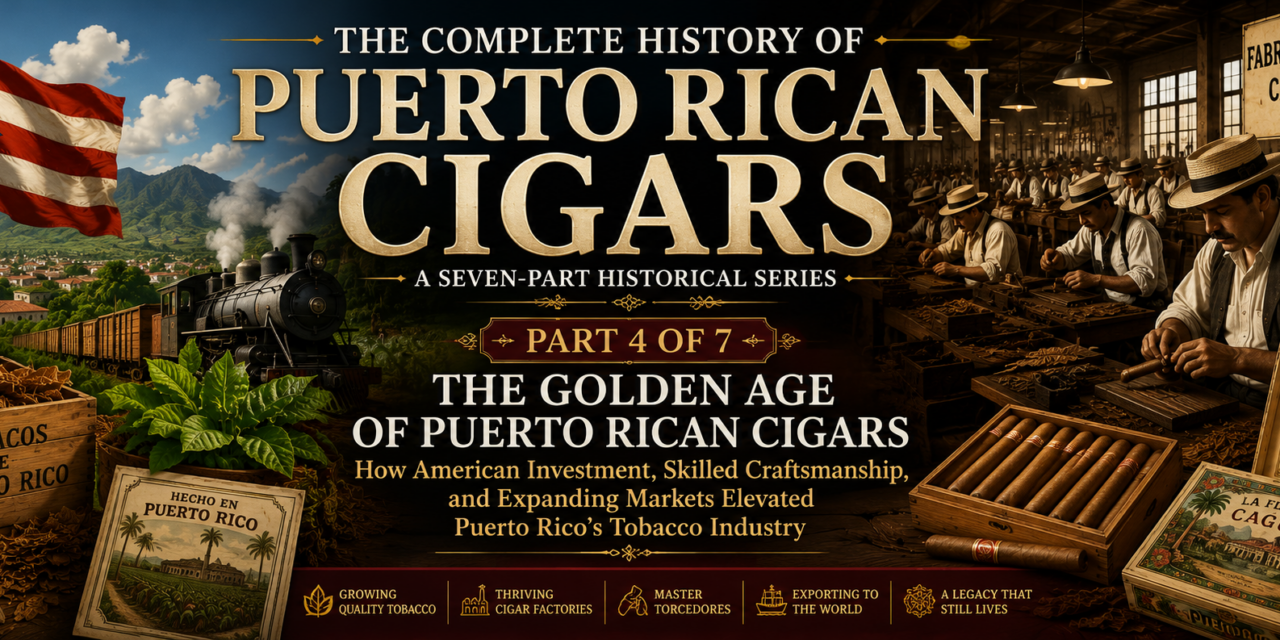
The Complete History of Puerto Rican Cigars
Part 4 of 7
The Golden Age of Puerto Rican Cigars
How American Investment, Skilled Craftsmanship, and Expanding Markets Elevated Puerto Rico’s Tobacco Industry
By the close of the nineteenth century, Puerto Rico had already established itself as an important producer of quality tobacco. Farmers had perfected cultivation techniques, cigar factories were becoming more common, and skilled torcedores were producing hand-rolled cigars that earned respect throughout the Caribbean.
Then, in 1898, everything changed.
Following the Spanish-American War, Puerto Rico became a territory of the United States. The political transition dramatically altered the island’s economy and opened the door to one of the most prosperous periods in Puerto Rican tobacco history.
During the first half of the twentieth century, tobacco production expanded, factories modernized, exports increased, and thousands of Puerto Rican families found employment in an industry that became one of the island’s economic pillars.
For many historians, this period represents the golden age of Puerto Rican cigars.
Access to America’s Largest Market
One of the greatest advantages of becoming a U.S. territory was access to one of the world’s largest consumer markets.
American demand for cigars remained strong throughout the early twentieth century.
Puerto Rican manufacturers now found themselves in a favorable position to supply wholesalers and retailers across the mainland.
Improved shipping routes shortened delivery times.
Commercial investment increased.
The industry grew rapidly.
Factories that had once served local and regional markets began expanding production to meet growing demand from the continental United States.
Investment Changes the Industry
As opportunities expanded, larger tobacco companies increased their presence in Puerto Rico.
Capital flowed into curing facilities, warehouses, processing plants, and cigar factories.
Improved equipment helped increase efficiency while preserving the craftsmanship required for premium hand-rolled cigars.
Although tobacco remained an agricultural product, it had become a sophisticated manufacturing industry as well.
Thousands of workers found employment throughout every stage of production.
The Rise of Puerto Rico’s Cigar Factories
Communities across the island experienced significant growth as cigar manufacturing expanded.
Factories employed skilled artisans responsible for transforming carefully cured tobacco into finished cigars.
Each cigar passed through numerous hands before reaching a customer.
Leaves were inspected.
Sorted.
Fermented.
Selected for filler, binder, and wrapper.
Only after every component met quality standards did the torcedor begin rolling the cigar.
This attention to detail became a hallmark of Puerto Rican craftsmanship.
The Master Torcedores
No machine could replace the knowledge of an experienced cigar roller.
Master torcedores trained for years before achieving the consistency expected by factory owners.
They understood how tobacco behaved.
How moisture affected construction.
How wrapper leaves stretched.
How filler influenced flavor.
Every cigar reflected years of experience.
Factories depended upon these artisans to maintain their reputation for quality.
The torcedor became one of the most respected skilled trades in Puerto Rico.
Communities Built Around Tobacco
The tobacco industry supported far more than cigar factories.
Entire communities depended upon it.
Farmers cultivated the crop.
Carpenters built curing barns.
Box makers crafted cedar cigar boxes.
Printers designed colorful labels.
Merchants handled exports.
Shipping companies transported finished cigars.
Retailers introduced Puerto Rican brands to customers throughout North America.
The industry’s economic impact reached well beyond agriculture.
It helped sustain local businesses, schools, churches, and countless families.
Puerto Rican Cigars Earn International Recognition
Throughout the early twentieth century, Puerto Rican cigars continued earning respect for their quality and consistency.
Manufacturers emphasized craftsmanship over mass production.
Hand-selected tobacco.
Carefully aged leaves.
Beautiful presentation.
Reliable construction.
While Cuba remained the world’s best-known cigar-producing nation, Puerto Rico developed its own identity as a producer of premium Caribbean cigars.
Its reputation rested on quality, skilled labor, and generations of agricultural knowledge.
Success Brings New Challenges
Even during its most prosperous years, the industry began facing new pressures.
Machine-made cigarettes became increasingly popular.
Large corporations consolidated smaller tobacco businesses.
Consumer preferences slowly changed.
Economic modernization encouraged many Puerto Ricans to seek employment outside agriculture.
Although the cigar industry remained strong, the forces that would eventually reshape it were already beginning to appear.
Few realized that this remarkable era would not last forever.
A Lasting Legacy
The golden age left an enduring mark on Puerto Rico.
It created generations of expert cigar rollers.
It strengthened farming communities.
It established manufacturing traditions that continue inspiring today’s boutique cigar makers.
Many of Puerto Rico’s modern tobacco artisans trace their techniques and values to the factories and farms that flourished during this remarkable period.
Their legacy continues with every hand-rolled cigar produced on the island today.
Coming Next
Part 5 of 7
The Decline of a Great Industry
Discover how changing consumer habits, industrialization, global competition, economic transformation, and the rise of cigarettes gradually reduced one of Puerto Rico’s most important agricultural industries—and how its rich heritage survived despite decades of decline.